Chapter 6 of 8
Evidence synthesis: choosing between meta-analysis and narrative synthesis
3 min read · Updated
In short
Key takeaways
- The choice between meta-analysis and narrative synthesis depends on conceptual and statistical similarity of the included studies, not on preference.
- Meta-analysis requires sufficient similarity across PICO elements for a pooled summary to be clinically meaningful.
- Heterogeneity thresholds such as I-squared are rules of thumb; the Cochrane Handbook stresses interpreting heterogeneity in context rather than against a single cut-off.
- Narrative synthesis is the honest choice when designs, populations, or interventions differ too much, or when outcome reporting is too incomplete to pool.
- Narrative synthesis should follow SWiM reporting guidance so it stays structured, transparent, and auditable.
The next stage is evidence synthesis: deciding how to bring extracted data together so readers can understand what the body of evidence shows. That plan shapes tables, figures, effect estimates (where appropriate), and the narrative in your results and discussion.
Synthesis is not one-size-fits-all. The right approach depends on how similar your included studies are in design, population, interventions or exposures, and outcomes—and on what your review question asks.
Choosing an appropriate synthesis method
Start from whether your extracted studies are conceptually and statistically similar enough to support one pooled summary, or whether a structured narrative is the safer and more honest presentation.
Meta-analysis vs. narrative synthesis — side-by-side comparison
For citations and finer points (PICO alignment, I², SWiM), see the prose under this table.
| Topic | Meta-analysis | Narrative synthesis |
|---|---|---|
| Conceptual “sameness” (PICO) | Pooling is defensible when populations, interventions or exposures, comparators, and outcomes are similar enough that one summary effect is clinically meaningful. | When PICO elements differ importantly across studies, a single pooled estimate would misrepresent the evidence. |
| Heterogeneity & statistical pooling | I² and related statistics should support combining studies; very high inconsistency can make one average effect misleading. | If outcomes or metrics cannot be aligned, or reporting is too sparse, statistical pooling is not appropriate. |
| Transparency & methods guidance | Follow reporting standards for quantitative synthesis (e.g. PRISMA flow, forest plots, heterogeneity diagnostics). | Use structured narrative methods—such as SWiM—so synthesis stays systematic rather than impressionistic. |
How reviewers usually decide
Whether to proceed with a meta-analysis or stay with a narrative synthesis depends mainly on the conceptual and statistical “sameness” of your extracted data. Meta-analysis is appropriate when included studies are sufficiently similar in their PICO elements (Population, Intervention, Comparator, and Outcome) for a pooled summary estimate to be clinically meaningful (Soni, 2023). Statistically, heterogeneity—often described with the I² statistic—should not be so extreme that a single average effect would mislead readers; authors commonly cite rules of thumb around I² (for example values below 75%) alongside clinical judgment, but the Cochrane Handbook stresses interpreting heterogeneity in context rather than relying on a single cut-off (Higgins et al., 2003; Soni, 2023).
Conversely, narrative synthesis is indicated when studies differ too much in design, populations, or interventions, or when outcome data are too incompletely reported for defensible mathematical pooling (Campbell et al., 2020). In those situations, researchers should follow the SWiM (Synthesis Without Meta-analysis) guidelines so the narrative remains a rigorous, transparent, and reproducible systematic synthesis—not a subjective commentary (Campbell et al., 2020; Preprints.org, 2026).
References (selected): Campbell et al. (2020), SWiM reporting guidance; Higgins et al. (2003), heterogeneity and I²; Soni (2023), conceptual alignment for meta-analysis; Preprints.org (2026), as cited for supplementary synthesis reporting.
For implementation details on pooling, see the Meta-analysis chapter.
How AIPRA helps you plan synthesis
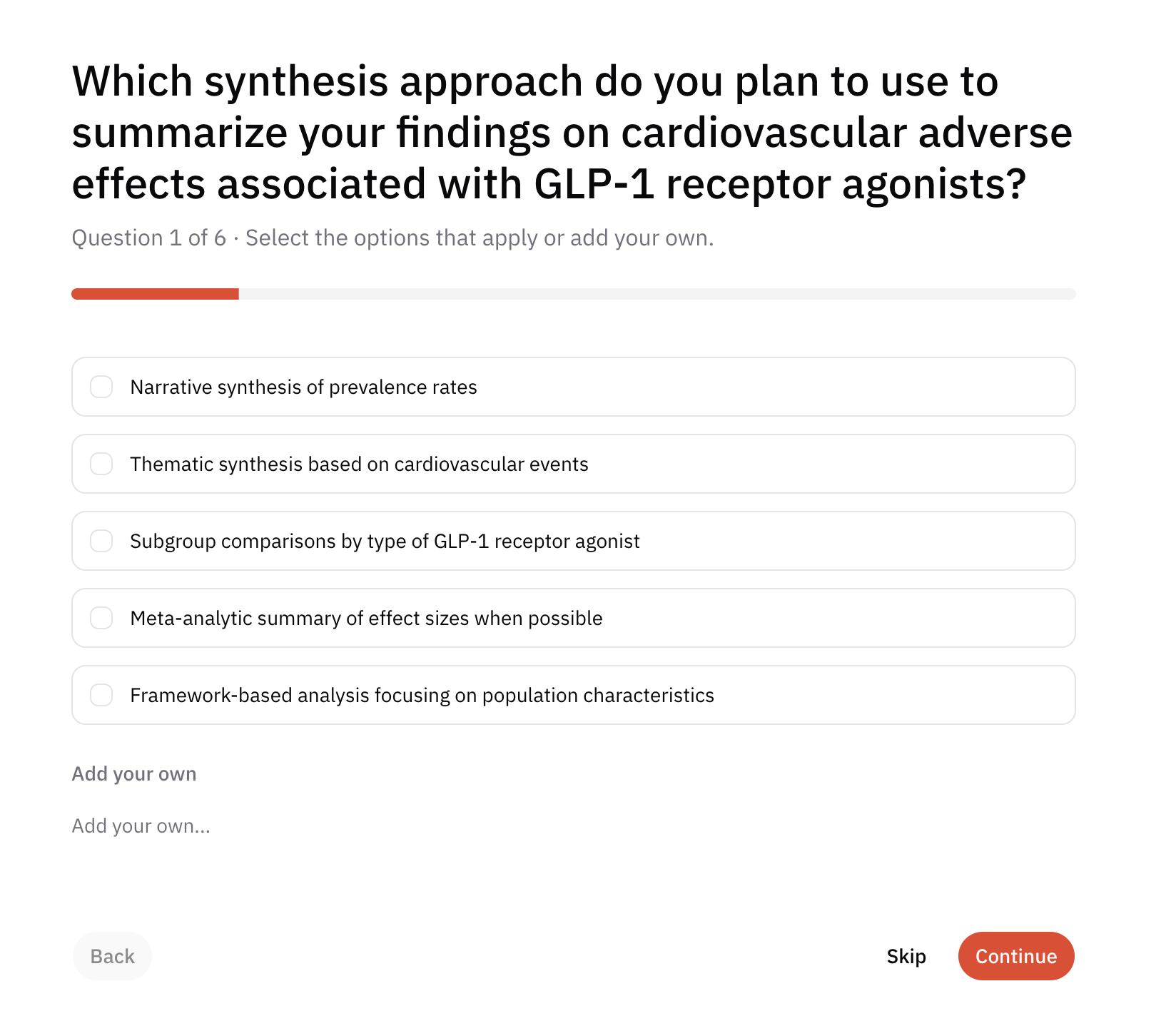
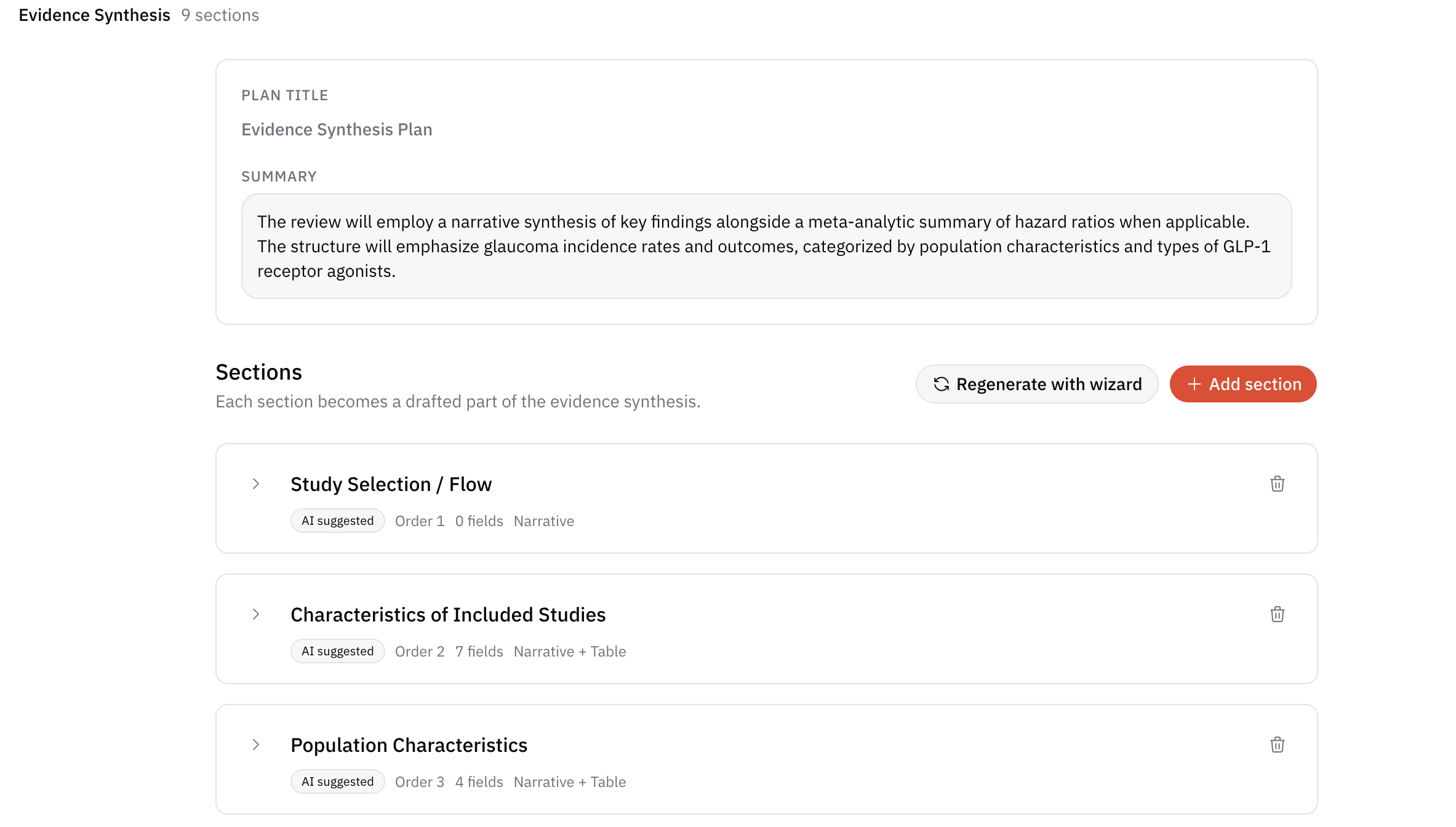
AIPRA asks a short series of questions about your review goals, the nature of your included studies, and how you want to present results. Those answers help surface a sensible default for synthesis— whether quantitative, narrative, or mixed—and inform how downstream writing and tables should be structured.
Frequently asked questions
When is meta-analysis appropriate in a systematic review?
Meta-analysis is appropriate when included studies are similar enough in population, intervention, comparator, and outcome that a pooled estimate is clinically meaningful, and when between-study heterogeneity is not so large that an average effect would mislead readers. Both conceptual and statistical similarity matter.
What is the difference between narrative synthesis and meta-analysis?
Meta-analysis statistically pools effect estimates into a summary effect with a confidence interval. Narrative synthesis describes and structures findings without mathematical pooling, and is used when studies are too heterogeneous or too incompletely reported for pooling to be defensible.
What is the SWiM guideline?
SWiM stands for Synthesis Without Meta-analysis. It is reporting guidance for systematic reviews that synthesize results without statistical pooling, and it exists to keep narrative synthesis rigorous, transparent, and reproducible rather than subjective.
References
- Campbell M, McKenzie JE, Sowden A, et al. Synthesis without meta-analysis (SWiM) in systematic reviews: reporting guideline. BMJ. 2020;368:l6890. doi:10.1136/bmj.l6890
- Higgins JPT, Thompson SG, Deeks JJ, Altman DG. Measuring inconsistency in meta-analyses. BMJ. 2003;327(7414):557-560. doi:10.1136/bmj.327.7414.557
How to cite this chapter
AIPRA. Evidence synthesis: choosing between meta-analysis and narrative synthesis. In: The Systematic Review E-book. Updated 2026-09-05.
A plain-text version of this chapter is available at /systematic-review-ebook/evidence-synthesis.md.