Chapter 1 of 8
How to conduct a systematic review: workflow overview
4 min read · Updated
In short
Key takeaways
- A systematic review sits at the top of the evidence hierarchy because its methods are prespecified, systematic, and reproducible.
- Reviews are normally a collaboration between domain experts (subject knowledge) and methodology experts (search design, screening, reporting).
- The workflow is sequential: the research question constrains eligibility criteria, which constrain the search, screening, extraction, and synthesis.
- The protocol is a living document that grows as each workflow stage is completed, so what was planned matches what was executed and reported.
Systematic reviews represent one of the highest levels of evidence for a given topic. They are usually led by domain experts—people with deep knowledge of the subject—working together with methodology experts (often information specialists or librarians) who are skilled in the structured steps of designing searches, screening, extraction, and reporting.
AIPRA is a platform where those methodology steps are implemented in software and augmented with artificial intelligence (AI). The goal is to give domain experts a practical path to conduct high-quality systematic reviews while supporting librarians and methods leads with tools that reduce repetitive work and keep the process consistent.
The product is organized as a stepwise workflow: each stage depends on the one before it, so decisions stay aligned from the research question through the final manuscript. As you move through the workflow, AIPRA can assemble different parts of your protocol automatically from what you define in each step.
The AIPRA model
From many studies to one systematic review
Hover, focus, or tap each part of the figure to see what it represents.
Evidence enters from many directions
Each incoming ray represents records gathered from bibliographic databases, trial registries, citation searching, and other sources. Searching broadly reduces the risk of missing relevant evidence.
Search · import · deduplicate
First step
Research question
Everything starts with a clear, well-scoped question. That framing drives your eligibility criteria, search strategy, outcomes, and synthesis plan.
Protocol development through the workflow
After the question is set, protocol building in AIPRA happens by working through the stages below. You configure each part of the review in turn; the platform ties those choices back into a coherent protocol as you go.
AIPRA workflow: protocol by doing the work
Each step below builds on the previous one. Select a step to see what happens in that stage and jump to the matching e-book chapter.
- 1
- Select which bibliographic databases and other sources to search.
- Construct and refine search queries so they match your protocol and reporting standards.
- AIPRA can help generate and organize protocol-ready search documentation as you work.
- 2
- Build explicit screening criteria aligned with your research question.
- Move from title and abstract review to full-text assessment with a clear audit trail.
- AIPRA supports dual review workflows and conflict resolution when reviewers disagree.
- 3
- Define the fields and coding rules you need for each included article.
- Extract study characteristics, outcomes, and risk-of-bias items in a consistent format.
- AIPRA keeps extraction linked to the article record and your protocol.
- 4
- Decide how results will be tabulated, narratively synthesized, and visualized.
- Align tables and figures with your review’s questions and certainty assessments.
- AIPRA helps you move from raw extraction to a coherent synthesis plan.
- 5
- Draft sections that follow guidelines such as PRISMA and journal requirements.
- Connect methods, results, and interpretations back to each workflow step.
- AIPRA supports exporting and authoring so the write-up reflects what you actually did.
Quantitative synthesis is covered in the Meta-analysis chapter when your review includes pooled estimates.
By the time you have walked through searching, screening, extraction, evidence synthesis, and writing, your protocol and workflow artifacts reflect the same story—what you planned is what you executed and reported.
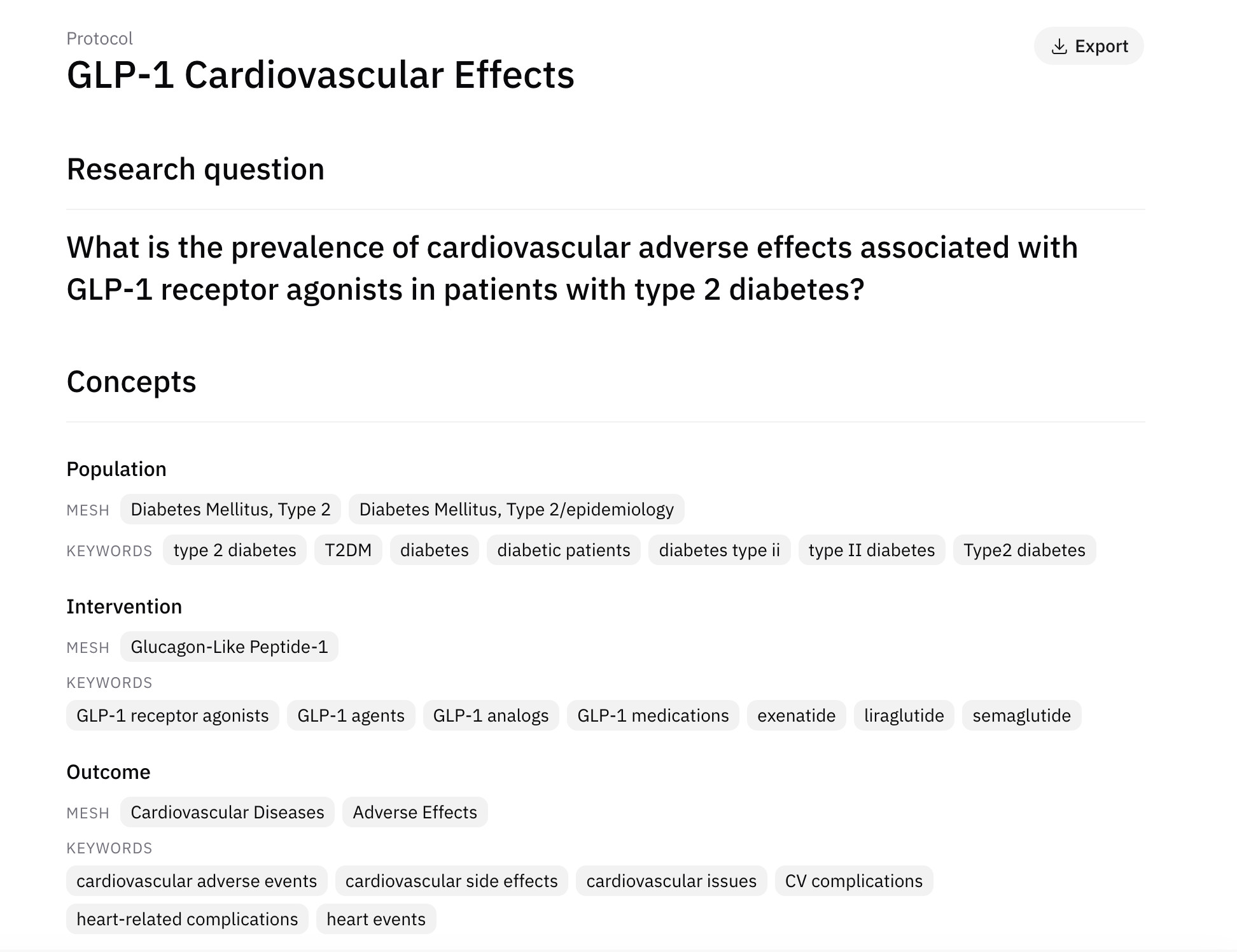
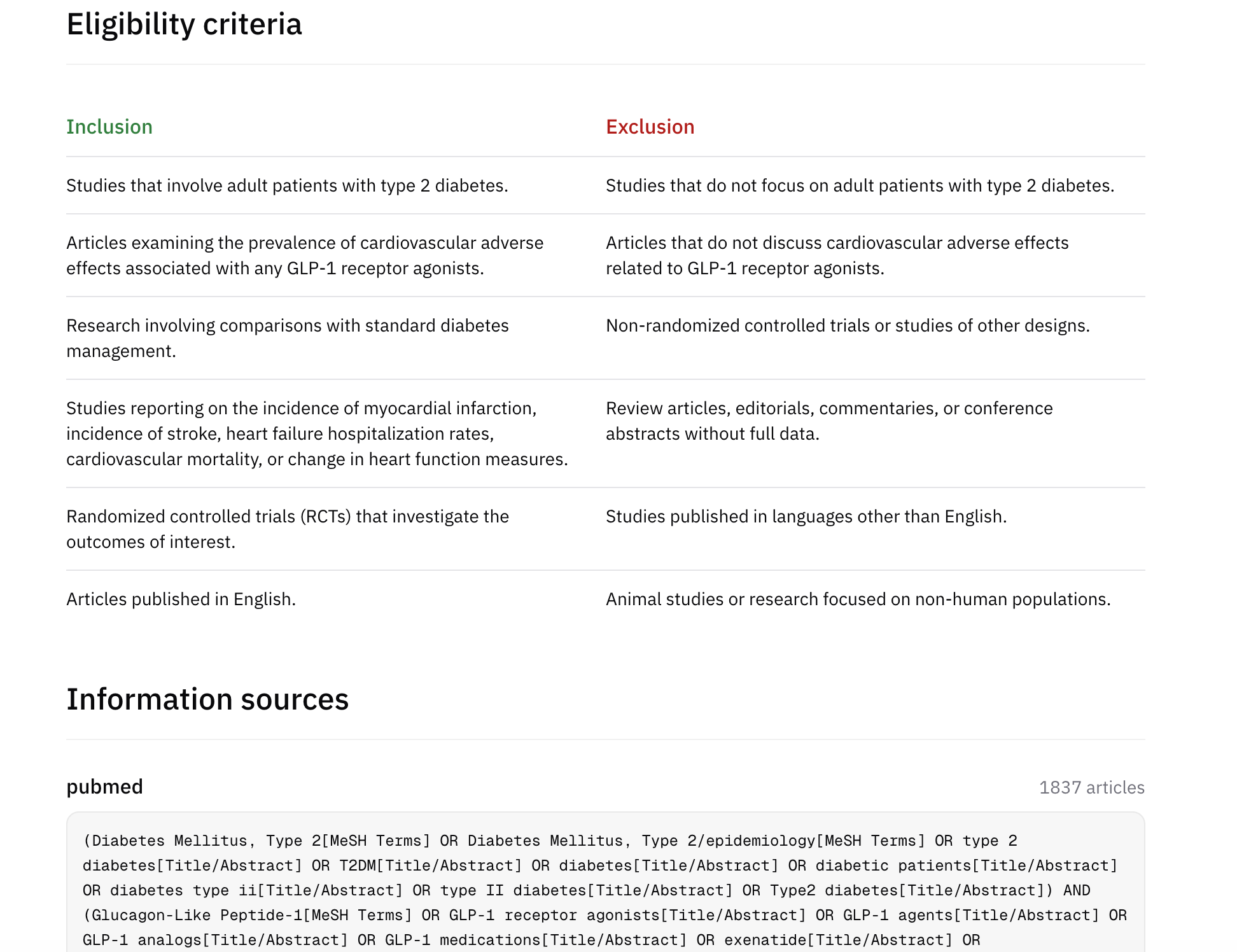
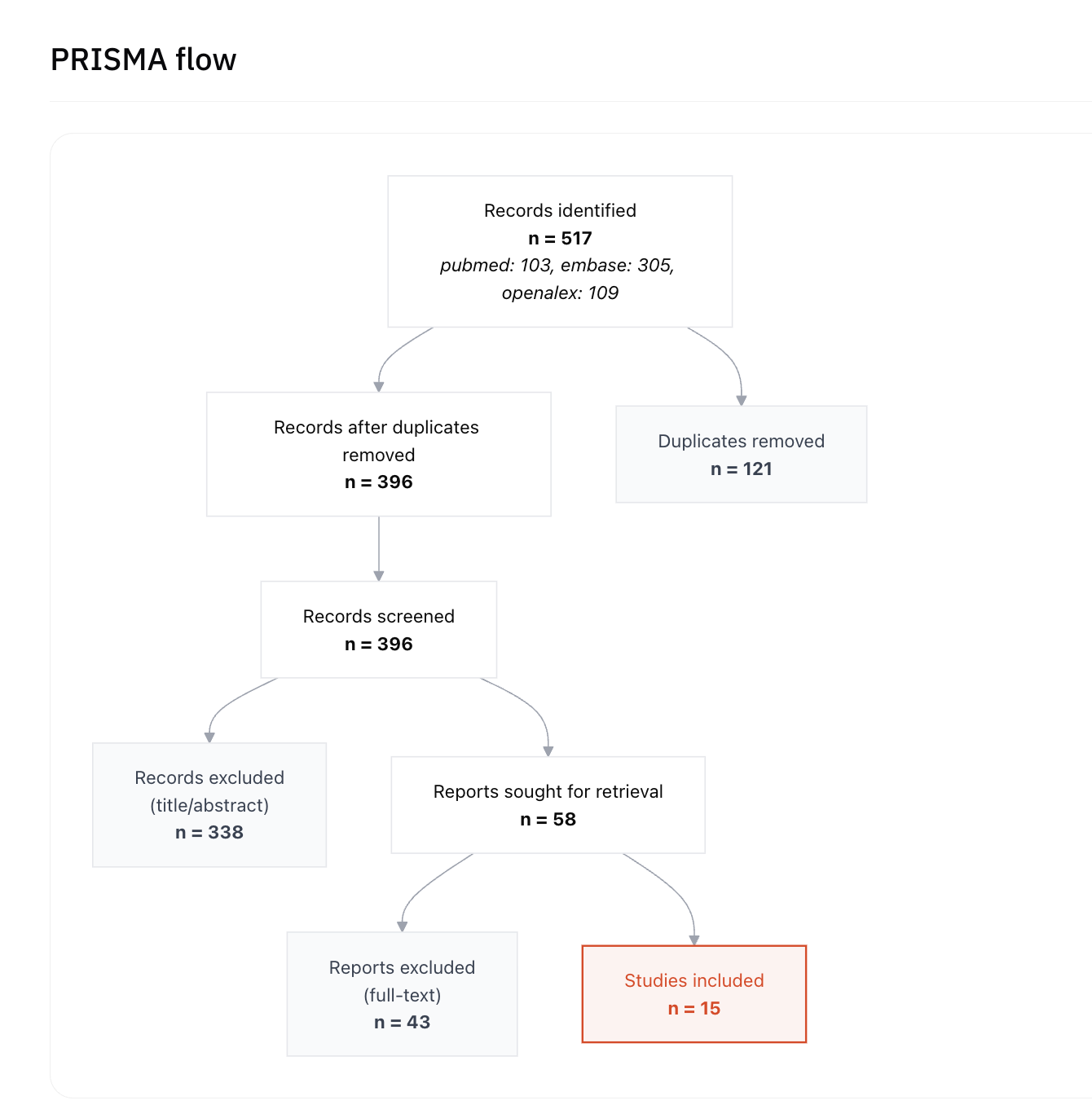
How the protocol document grows with your workflow
As you complete each stage, AIPRA incorporates the decisions and structured content from that step into the living protocol. The screenshots below illustrate how that document typically evolves as you move through the workflow.
Frequently asked questions
What are the steps of a systematic review?
The main steps are: (1) formulate a focused research question, (2) select databases and build search queries, (3) deduplicate and screen records at title/abstract then full text, (4) extract structured data from included studies, (5) plan and perform evidence synthesis (narrative or meta-analysis), and (6) write up Methods and Results with a PRISMA flow diagram. Each step depends on the decisions made in the previous one.
Who should be on a systematic review team?
Most high-quality reviews involve at least three people: two reviewers who screen and extract independently, plus a third who adjudicates disagreements. Teams commonly also include a librarian or information specialist for search strategy design.
How long does a systematic review take?
Traditional systematic reviews frequently take many months from protocol to submission, with screening being the largest single time cost because relevant records can be a very small fraction of total search results. Software can reduce administrative and screening burden, but methodological decisions and human verification still require expert time.
How to cite this chapter
AIPRA. How to conduct a systematic review: workflow overview. In: The Systematic Review E-book. Updated 2026-09-05.
A plain-text version of this chapter is available at /systematic-review-ebook/overview.md.