Chapter 4 of 8
Screening studies: inclusion criteria, dual review, and conflict resolution
3 min read · Updated
In short
Key takeaways
- Screening always starts from explicit inclusion and exclusion criteria; those criteria are the benchmark every record is judged against.
- Phase 1 screens title and abstract with include, exclude, or unclear decisions. Phase 2 applies the same criteria to full text for anything included or unclear.
- Criteria must be stated explicitly so every reviewer applies the same standard, which is what makes screening reproducible.
- Conflicts between reviewers should be resolved by a predefined rule — commonly a third, senior reviewer who adjudicates independently.
- AI-assisted screening can suggest include or exclude decisions with rationale, but reviewers remain responsible for final decisions under the protocol.
The next major workflow step is screening. Screening always starts with clear inclusion and exclusion criteria—the rules that define which studies belong in your review. Those criteria are the benchmark every retrieved record is judged against.
AIPRA guides you through tailored questions about your topic so the platform can help shape eligibility rules that match your research question and protocol. Your answers inform how strict or broad the review should be and what study designs and populations are in scope.
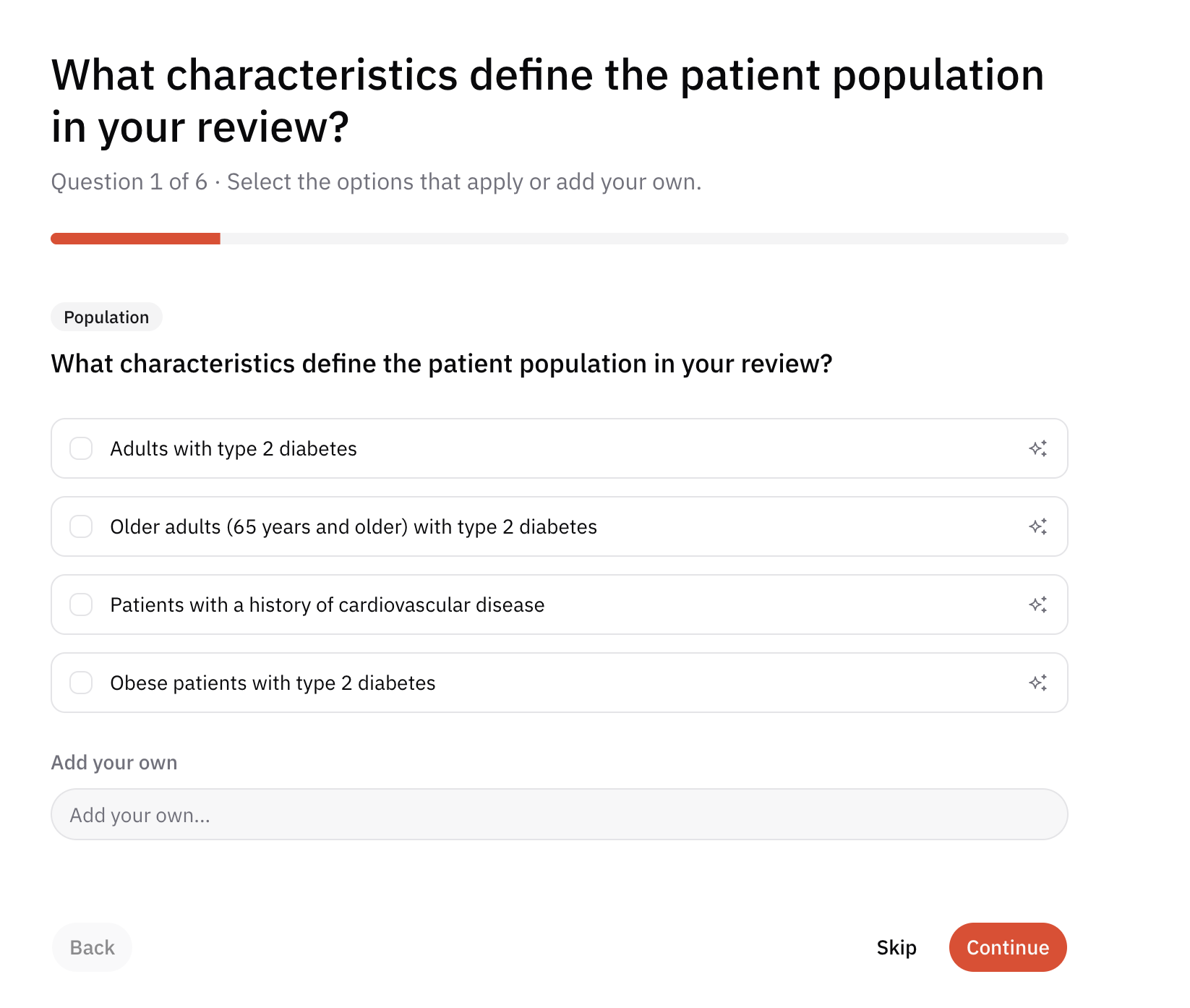
Once captured, the criteria are stated explicitly so the whole team applies the same standard. Every title, abstract, and full text is compared against that benchmark to decide whether the work should move forward in the project.
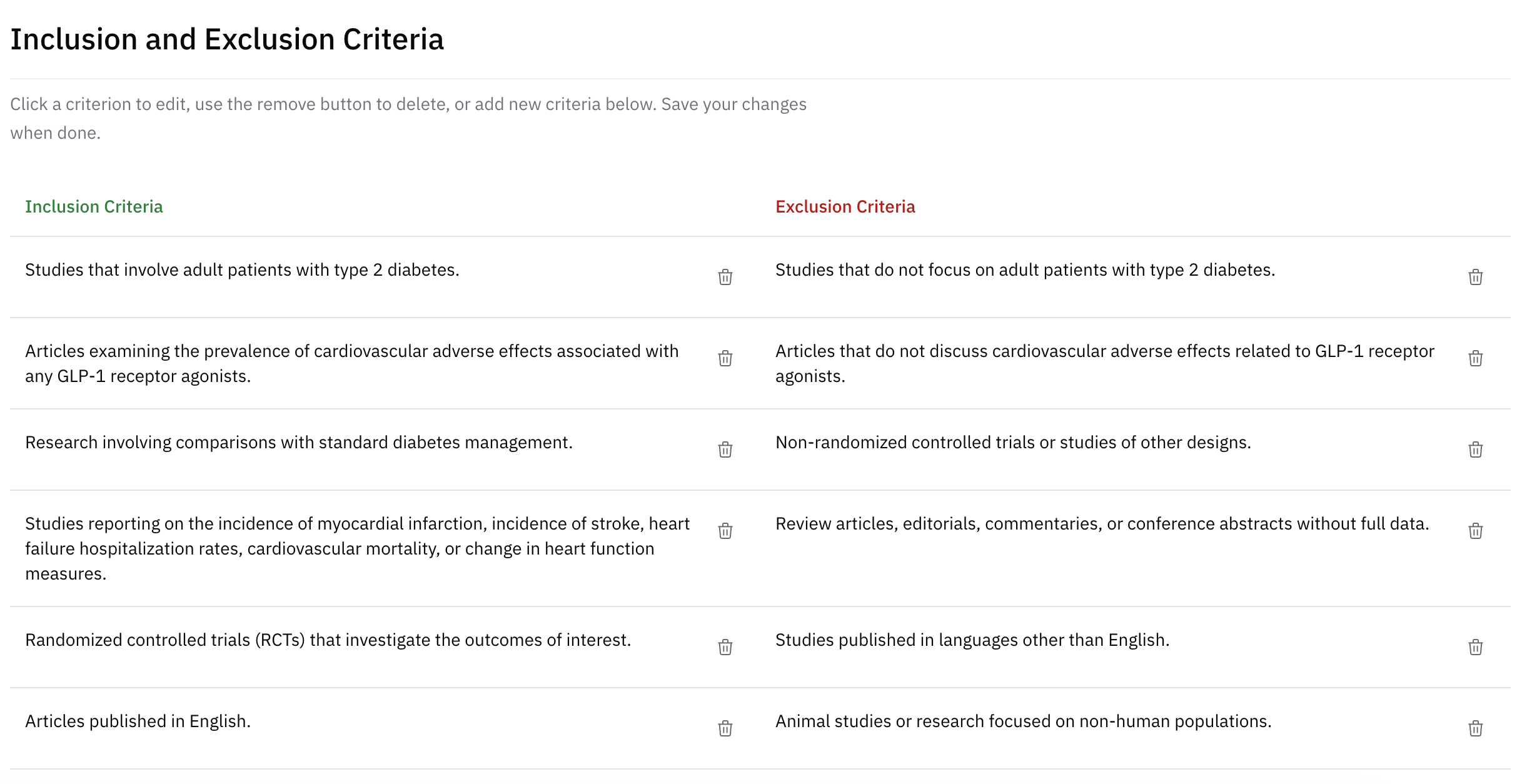
Assisted screening in AIPRA
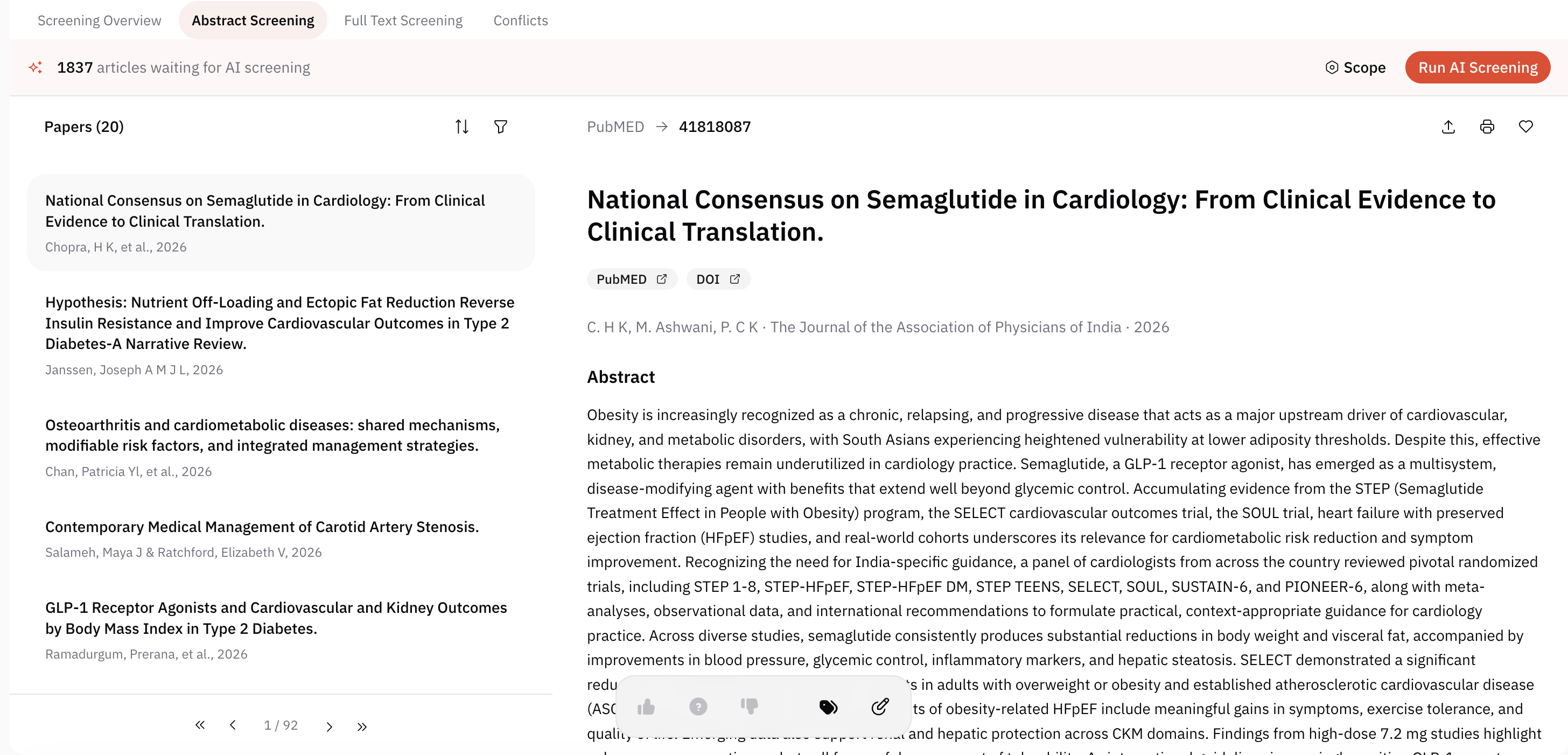
During screening, AIPRA can surface recommendations for each article: suggested include or exclude decisions grounded in your stated criteria, together with a short rationale. Reviewers remain in control—recommendations support consistency and speed, but final decisions should follow your protocol and, where needed, librarian or methods oversight.
Two screening phases
The goal is to retain only studies that meet your inclusion rules. That usually happens in two phases:
- Phase 1 — Title and abstract. For most records, reviewers decide inclusion, exclusion, or “unclear” using title and abstract alone. This step filters out the bulk of irrelevant citations efficiently.
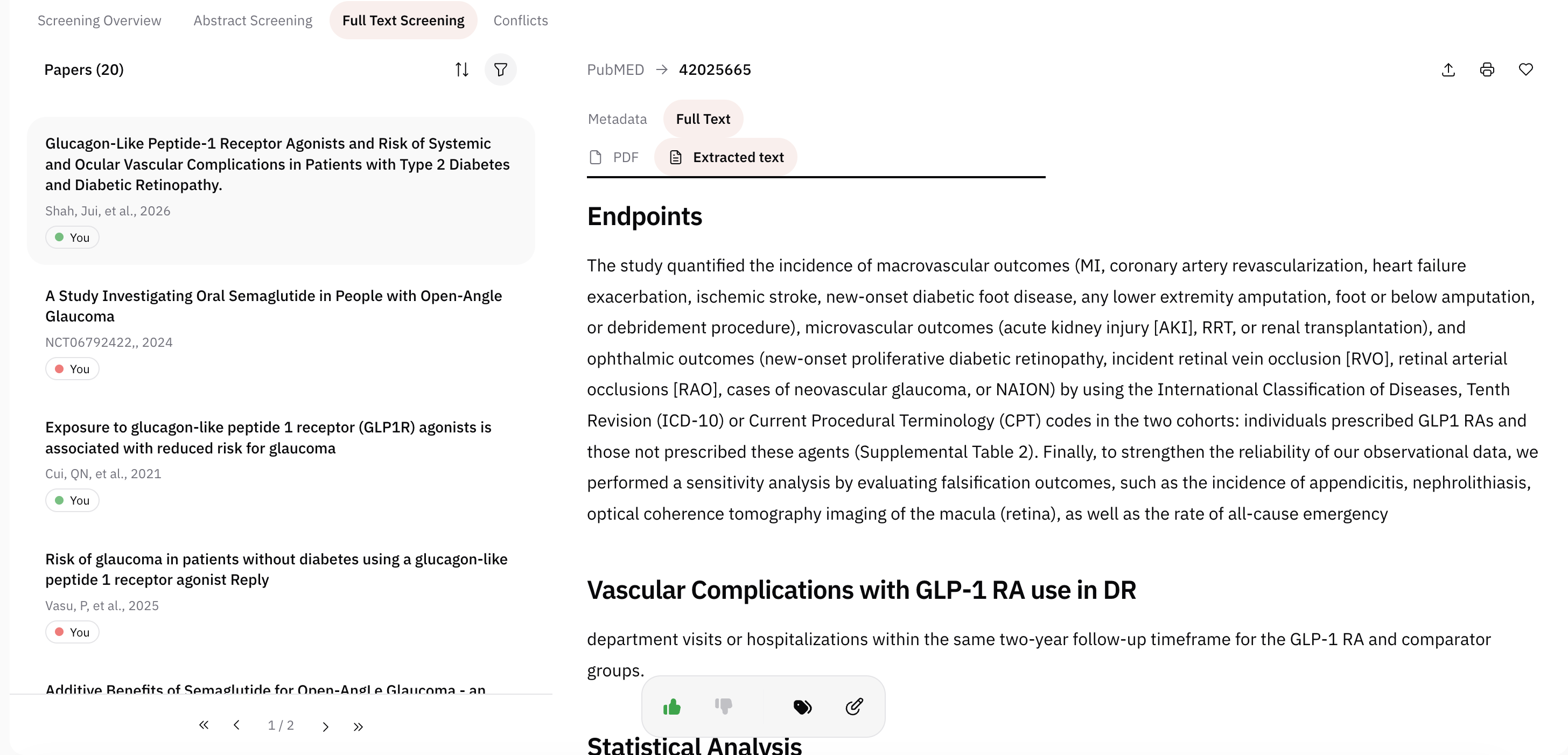
- Phase 2 — Full text. Any record marked included or unclear after phase 1 proceeds to full-text screening, where the complete article is read against the same criteria.
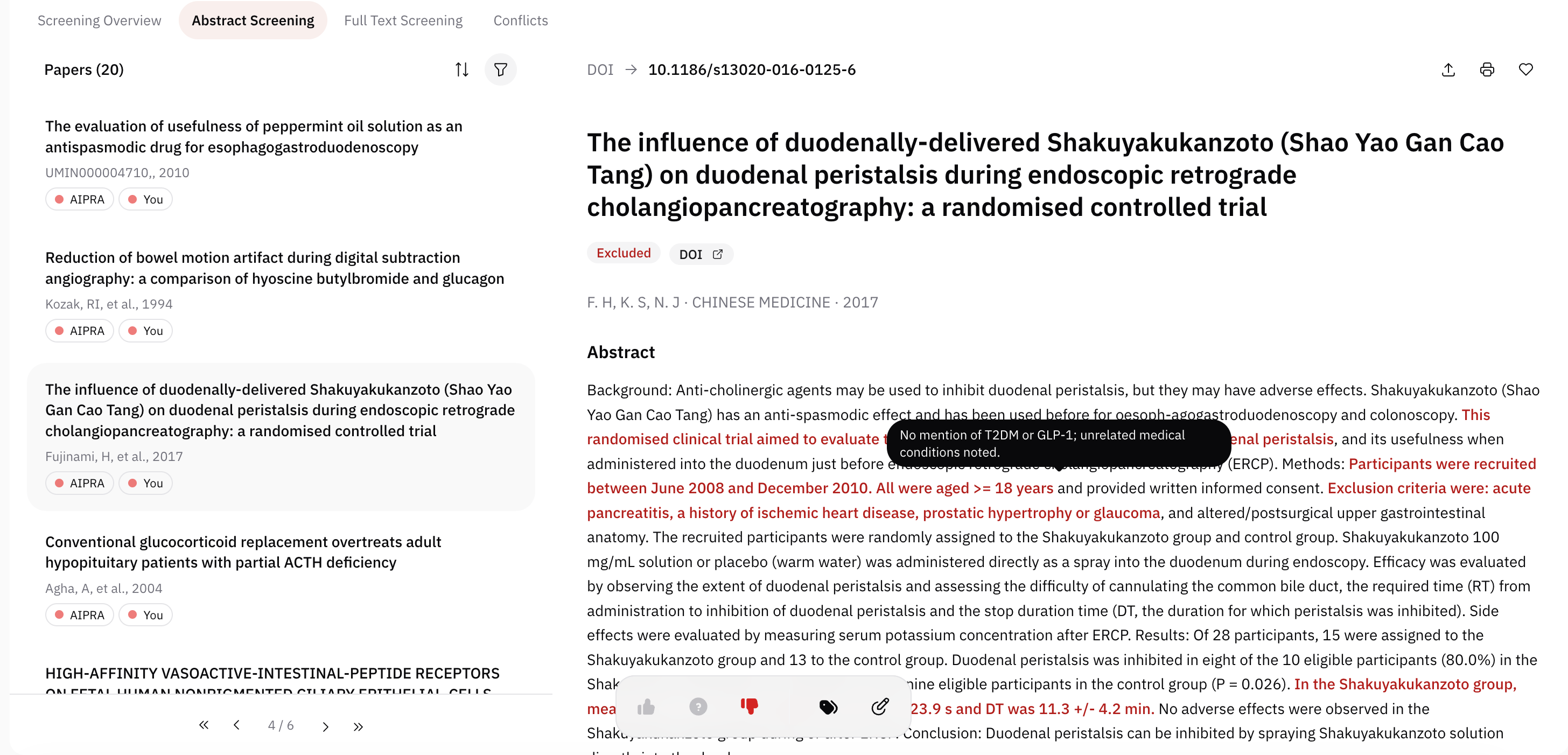
In phase 2, reviewers open the full text in AIPRA and apply the same eligibility rules to the complete article.
Resolving disagreements between reviewers
In projects with multiple reviewers, it is common for some articles to receive conflicting votes—for example one reviewer includes and another excludes. Good practice is to resolve those conflicts with a predefined rule, often by involving a third, senior reviewer who adjudicates without having been part of the initial pair. That keeps decisions transparent and reduces bias from repeated discussion alone.
AIPRA’s screening workflow is built to record who decided what, so adjudication and final outcomes stay traceable for the protocol and the published review.
Frequently asked questions
What are the two stages of systematic review screening?
The first stage is title and abstract screening, where reviewers decide include, exclude, or unclear using only the citation metadata. The second stage is full-text screening, where every record marked include or unclear is read in full and judged against the same eligibility criteria.
How do you resolve screening disagreements between reviewers?
Set the rule before screening begins. The usual approach is adjudication by a third, senior reviewer who was not part of the original pair, which keeps decisions transparent and reduces bias from repeated discussion between the disagreeing reviewers.
Can AI be used to screen studies for a systematic review?
AI can prioritize or recommend include and exclude decisions with supporting rationale, and is increasingly used as a first-pass filter or as a second screener. Human oversight remains required: reviewers verify recommendations against protocol criteria, and AI use should be reported transparently in the manuscript.
What should inclusion and exclusion criteria specify?
Criteria typically specify the population, intervention or exposure, comparator, and outcomes, plus eligible study designs and any limits on language, publication date, or setting. They should map cleanly onto both your screening form and your reported PRISMA counts.
How to cite this chapter
AIPRA. Screening studies: inclusion criteria, dual review, and conflict resolution. In: The Systematic Review E-book. Updated 2026-09-05.
A plain-text version of this chapter is available at /systematic-review-ebook/screening.md.